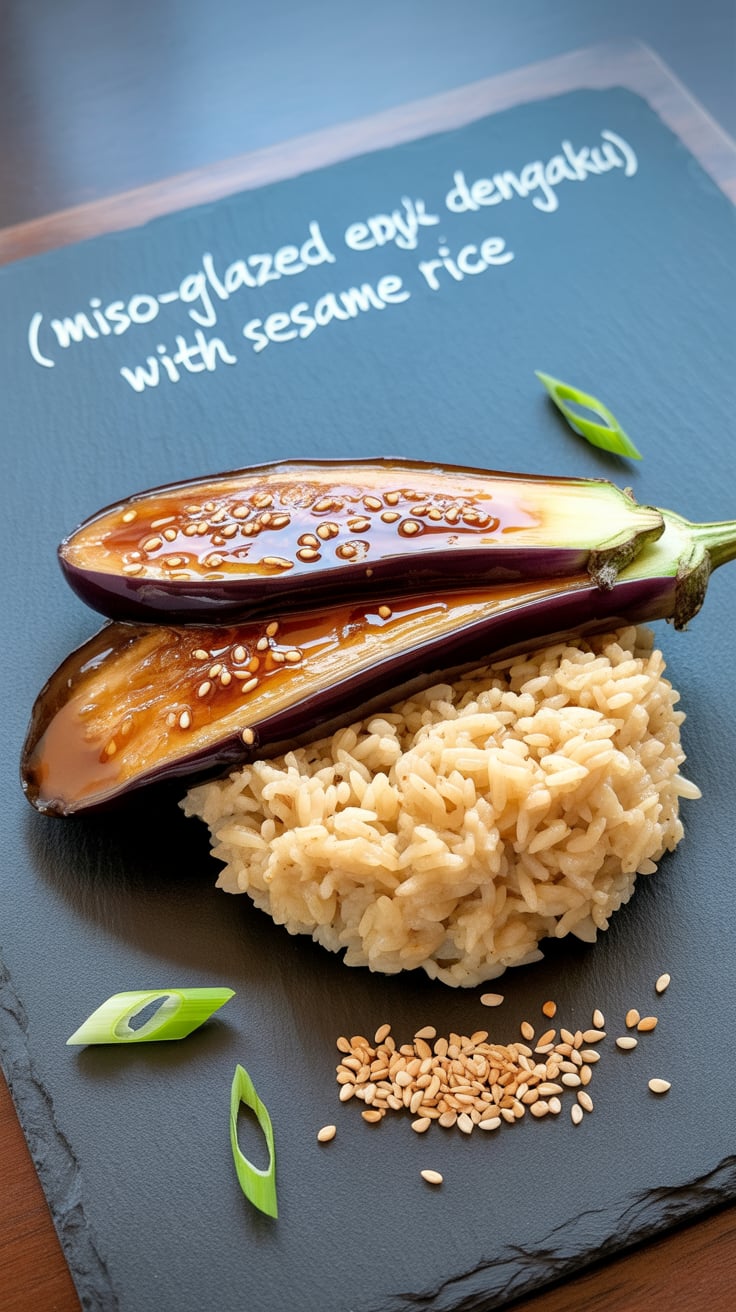
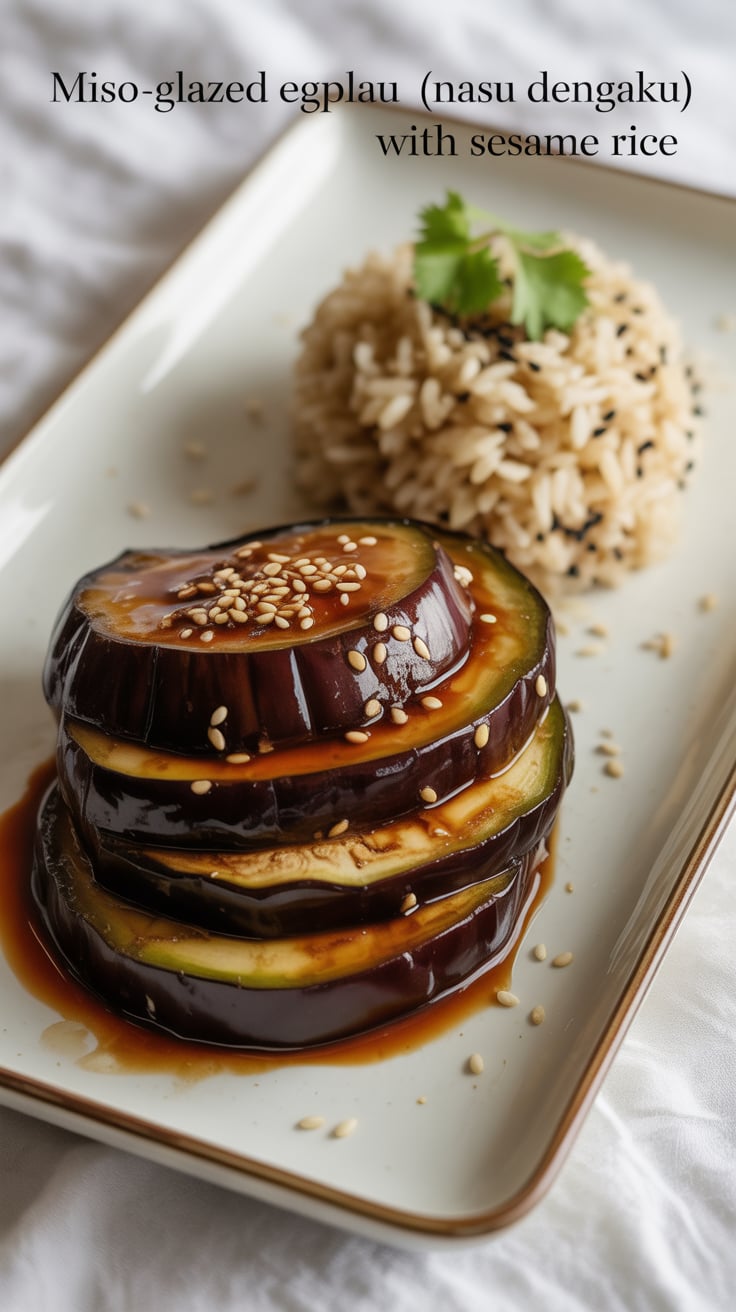
Imagine yourself in a traditional Japanese izakaya, a cozy and welcoming tavern where friends gather to enjoy delicious food and drinks. The air is filled with the aroma of sizzling skewers on the grill and the sound of laughter and chatter. One of the standout dishes on the menu is the Miso-Glazed Eggplant, also known as Nasu Dengaku, served with fragrant sesame rice. This dish is a perfect balance of sweet and savory flavors, with tender eggplant coated in a sticky miso glaze that caramelizes beautifully under the broiler.
History and Origins
Nasu Dengaku is a classic Japanese dish that dates back to the Edo period (1603-1868). It originated as a simple snack sold by street vendors outside temples and shrines. The dish consists of grilled or broiled eggplant that is brushed with a sweet and savory miso glaze. Over time, Nasu Dengaku has become a popular appetizer in Japanese cuisine, loved for its rich umami flavor and tender texture.
Health Benefits
Not only is Nasu Dengaku delicious, but it is also a healthy dish that can support weight loss and muscle gain. Eggplant is low in calories and rich in fiber, vitamins, and minerals. The miso glaze adds a boost of flavor while providing probiotics and antioxidants. The sesame rice complements the dish with complex carbohydrates and essential nutrients. Together, these ingredients make a nutritious and satisfying meal.
Why My Friends Love This Meal
My friends love this meal for its bold flavors and comforting textures. The combination of sweet miso glaze and smoky eggplant is irresistible, while the sesame rice adds a nutty crunch. This dish is perfect for sharing with loved ones, whether as an appetizer or a main course. It’s a crowd-pleaser that never fails to impress at dinner parties or casual gatherings.

Ingredients
- 2 large eggplants: for a meaty and tender texture
- 1/4 cup white miso paste: for a rich umami flavor
- 2 tablespoons mirin: for sweetness and depth
- 2 tablespoons soy sauce: for saltiness and complexity
- 1 tablespoon sugar: for caramelization and balance
- 1 cup sushi rice: for a sticky and aromatic base
- 2 tablespoons sesame seeds: for a nutty and crunchy topping
Preparing the Ingredients
Before you begin cooking, make sure to wash and dry the eggplants thoroughly. Cut them into thick slices or halves, depending on your preference. In a small bowl, mix the miso paste, mirin, soy sauce, and sugar until smooth. Toast the sesame seeds in a dry skillet until golden brown and fragrant. Rinse the sushi rice under cold water until the water runs clear, then cook according to package instructions.
Macros and Calories
One serving of Miso-Glazed Eggplant with Sesame Rice contains approximately 350 calories, with 8 grams of protein, 65 grams of carbohydrates, and 6 grams of fat. This balanced meal provides a good source of energy and nutrients to fuel your day.
Common Issues and Solutions
If the miso glaze is too thick, you can thin it out with a little water or sake. If the eggplant is too bitter, you can soak it in salted water for 30 minutes before cooking to remove any bitterness. If the rice is too sticky, you can add a splash of vinegar while cooking to loosen it up.
Why This Recipe is Healthy Yet Delicious
This recipe is a perfect example of how healthy food can also be delicious and satisfying. The eggplant is a nutrient-dense vegetable that is low in calories but high in fiber and antioxidants. The miso glaze adds depth of flavor without the need for excessive salt or sugar. The sesame rice provides a good source of complex carbohydrates and essential fatty acids. Together, these ingredients create a well-rounded and nourishing meal.
Instructions
- Preheat the broiler: Set your oven to broil and line a baking sheet with parchment paper.
- Prepare the eggplant: Brush the eggplant slices with the miso glaze and place them on the baking sheet.
- Broil the eggplant: Broil the eggplant for 5-7 minutes, or until the glaze is caramelized and bubbly.
- Cook the rice: While the eggplant is broiling, cook the sushi rice according to package instructions.
- Serve the dish: Plate the sesame rice and top it with the miso-glazed eggplant. Sprinkle with toasted sesame seeds and enjoy!
Cutting Techniques
When cutting the eggplant, make sure to use a sharp knife to get clean and even slices. You can leave the skin on for added texture and nutrients, or peel it off if you prefer a smoother texture. Be careful not to cut the slices too thin, as they may become mushy when cooked.
Kitchen Equipment Needed
To make this dish, you will need a baking sheet, parchment paper, a small bowl for the miso glaze, a brush for coating the eggplant, a skillet for toasting sesame seeds, and a pot for cooking the rice. Make sure to have all your ingredients prepped and ready to go before you start cooking.
Tips for Best Results
- Make sure to preheat your broiler before cooking the eggplant to ensure even cooking and caramelization.
- Brush the eggplant slices generously with the miso glaze to coat them evenly and create a sticky glaze.
- Toast the sesame seeds just before serving to preserve their nutty flavor and crunchy texture.
- Serve the dish hot and fresh for the best taste and presentation.
Alternative Ways to Enjoy
If you’re looking to change up this recipe, you can try using different vegetables like zucchini or bell peppers instead of eggplant. You can also experiment with different types of miso paste for varying levels of sweetness and saltiness. For a heartier meal, you can add grilled tofu or chicken on the side. The possibilities are endless!
Final Thoughts
Miso-glazed eggplant with sesame rice is a comforting, umami-forward dish that feels indulgent despite being plant-based and calorie-conscious. Broiling the eggplant gives a caramelized glaze with minimal oil, and pairing it with a modest portion of sesame or cauliflower rice keeps the meal balanced and waistline-friendly.
Bright garnishes like scallions, toasted sesame, and a squeeze of lime or yuzu elevate the flavors, while extra greens or a side of simply grilled tofu add bulk and protein without heavy calories. Make it ahead for easy weeknight dinners—store components separately in the fridge for up to 3–4 days and reheat gently, adding a splash of water if needed to loosen the glaze. Try it as written, then tweak the miso ratio or rice base to suit your taste and goals.